Sustainability
Championing responsible industry and protecting our environment
to create enduring value for a sustainable tomorrow.
Our planet and societies are facing enormous challenges. Our responsibility is to collaborate with our supply chain and industry partners to overcome these challenges and leave a lasting, positive legacy for future generations. All our actions should ensure we are protecting the planet, supporting our communities and delivering long-term value for all our stakeholders. These are the pillars that drive our sustainability vision.
To think exceptional is not an aspiration; it is a standard that we encourage our team to achieve. This mindset shapes everything we do, from the precision of our industrial floor preparation and shotblasting operations through to the way we plan, resource and manage each project. As an industry leader in specialist surface preparation and coatings, we aim to progress further and continue to demonstrate how a business must operate to realise a sustainable future for all.

85%
Euro 6 plant
vehicles

72%
Hybrid electric
company vehicles

90%
Waste diverted
from landfill
To reduce our environmental impacts, we first needed to understand them. Since 2015, we have recorded and monitored our energy usage across our buildings, specialist equipment and vehicle fleet. Our core operations, including shotblasting, grinding, planing and scarifying, require heavy plant and logistics to deliver, and managing the environmental footprint of this work is central to our strategy.
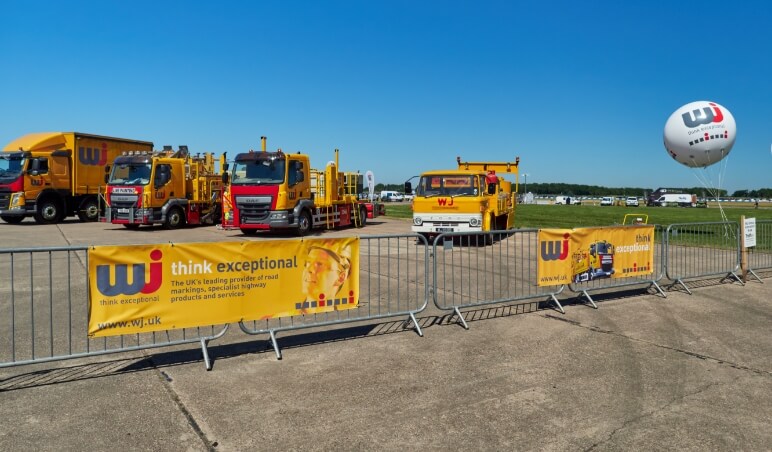
Telematics has played an important role in efficient routing and in helping us to monitor driver behaviour across our fleet. We have seen the results deliver substantial environmental benefits, with a 7.75% reduction in emissions related to driving yearly and a 12% increase in miles per gallon. We are also focusing attention on the waste streams produced by our surface preparation processes, working to separate and divert materials from landfill wherever feasible. Additionally, we have implemented in-office recycling initiatives and actively reuse certain materials across our operations.
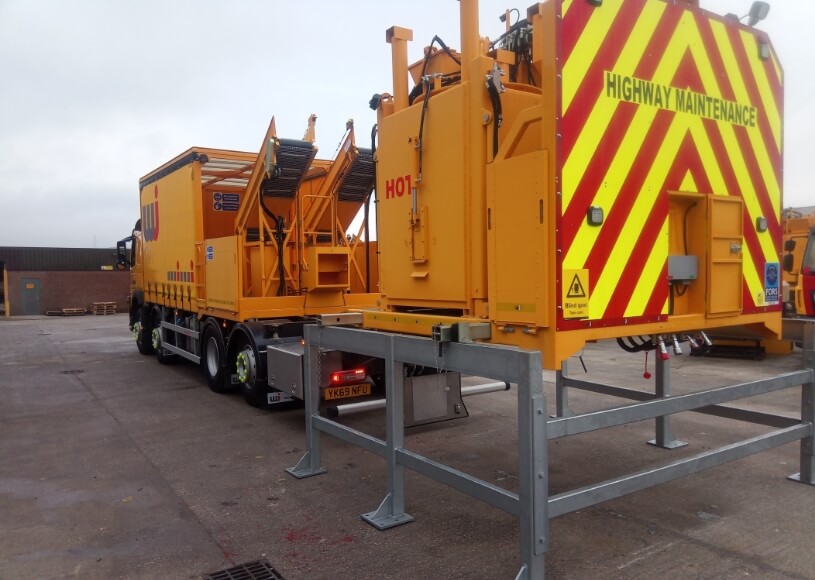
We are exploring new ways to reduce using non-renewables. Two of our main depots have solar panels, this is creating enough electricity to run these depots as well as feeding back into the grid. We have also limited the use of gas heating and each of our buildings now have automatic LED lights.
Another way we are reducing the need for excavating fossil fuels is via our products. We were able to create a Cradle to Gate Life Cycle Assessment Model that provides quick, efficient, and reliable at-scale carbon foot printing for all current and future hot applied thermoplastic products. This was then independently verified to PAS 2050:2011 and ISO14067 (2018) by Lucideon, meeting the specifications and standards requirements for quantifying and reporting.
Using the carbon footprint model, we were able to determine that switching from a hydrocarbon resin binder to a biogenic alternative; rosin ester, reduced the average embedded carbon in our materials by an average of 81%, which when calculated against the amount of material we produce
means a reduction of 22,000tCO2e, or more than double our total annual operational footprint. Moreover, this switch was constant neutral and did not affect the performance of our products.
Our product carbon footprint calculator has gone on to win awards and peaked international interest and collaboration in our value chain. By understanding the whole life cycle of our products, we can improve it.
Other ways that we have improved our thermoplastic products as well is by using recycled glass beads and recycled aggregates. We have also designed and developed our own road stud, Allux. This is manufactured using recycled aluminium and is infinitely recyclable.
Investing for the future is something we are very proud of at WJ Industrial. We pioneer new technology and operating practices within the specialist industrial services sector as part of our decarbonisation journey. This includes adopting more efficient preparation equipment, lower-emission coatings systems and smarter project scheduling to reduce unnecessary vehicle movements.

Looking ahead, we have plans to achieve net zero operationally by 2032 through setting a science-based target. This aligns with the UN Sustainable Development Goals and reflects our commitment as part of the wider WJ Group to responsible, long-term business practice.
Creating efficient value is fundamental to operating sustainably. This benefits the environment whilst also enabling us to deliver greater overall value to clients across industrial floor preparation and surface coating projects. Our approach targets both the embedded carbon within the materials we use and the operational carbon generated by our on-site processes.
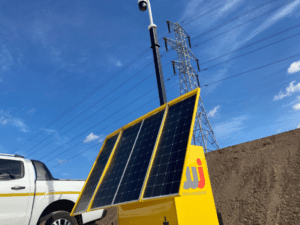
We have targets to work towards net zero and contribute to a circular economy in collaboration with our value chain, alongside responsible governance aligned with the global Sustainable Development Goals. To create value efficiently, we must consistently innovate and improve our vehicles, equipment, processes, behaviours and all other aspects of how WJ Industrial operates.
Value must be created meaningfully, which is why our innovations do not focus solely on efficiency but on a wide range of social and environmental attributes. This is evident across our floor preparation and shotblasting services, where refined working methods reduce waste, shorten project timescales and minimise disruption to client operations.
By improving the safety and efficiency of how our operatives carry out surface preparation work, we reduce time spent in potentially hazardous environments whilst delivering better project outcomes. Across the wider WJ Group, innovations such as the WJ Robotic PreMarker demonstrate the kind of technology-led thinking that informs how we approach improvement across our own operations. As a business, we understand our role in creating better outcomes for the communities in which we work, and we apply a social value model to measure the positive impact our activities generate across the UK.
Our Services
Speak to one of our team today and find out which services and products are the right fit for your project.
Speak to an expert >