Polished Concrete – A complete guide
Services: Concrete Polishing
What is polished concrete?
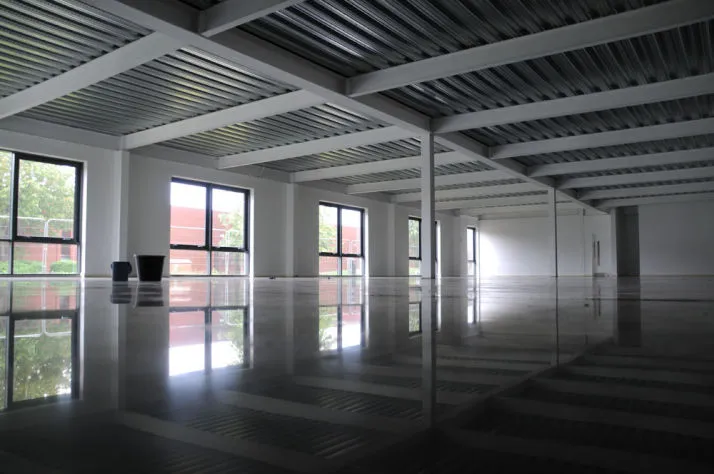
Polished concrete is a process of creating fine cuts within a concrete surface, grinding it down to a desired level of smoothness and shine. It is typically used in large warehouses, retail outlets, office buildings, restaurants and hotels.
How much does a polished concrete floor cost?
Exact costs vary from project to project depending on the condition of the existing floor and the desired finish, but costs typically start from £30 p/m2. Request a concrete polishing quote.
How to lay a polished concrete floor?
Concrete polishing can be done on existing or newly laid concrete. In either circumstance, the process is very similar.
- Surface Preparation
The existing floor needs to be prepared removing any coatings/repairing any cracks.
- Grinding
This is then followed by the grinding process, whereby the machine is run over the floor a multitude of times to achieve the desired smoothness and shine
- Surface treatment
Once the grinding has been completed, a densifier and sealant should be applied to the concrete to enhance its durability and finish, the floor will then undergo a final polish.
Types of polished concrete
The finish of polished concrete depends on the exposure of the aggregate within the concrete and the desired gloss level.
A satin/bronze finish
Surface grinding does not take place with this finish and therefore the concrete slab needs to be flat, uneven, and undamaged. The concrete is simply polished to achieve a gloss.
A Silver finish
A deep level of grinding takes place to create a surface that is as flat as possible. It is typically ground back to a surface level between 1-3mm, this exposes the larger stones and is then lightly polished leaving a matt finish.
A gold finish
Grinding isn’t as deep and therefore less ballast is exposed, this is also referred to as a “salt and pepper” appearance and has a high gloss finish.
A platinum finish
A platinum finish typically grinds back the surface level to 2-3mm, exposing the large stones within the aggregate. More grinding steps are involved with this finish to bring the floor up to a 3,000 grit, creating an extremely durable floor with the highest gloss finish.
How to maintain a Polished Concrete Floor?
The binder in concrete contains various forms of lime which have a high pH value, so the floor must be cleaned with a pH-neutral cleaner and a non-abrasive floor pad. A polish pad or microfibre mop and tap water are usually all that is needed to remove debris.
How to fix cracks in polished concrete floor?
Concrete floor isn’t completely resistant to cracks, environmental factors and foundation shifts can cause cracking. The method of repair is dependent on the depth of the crack. For hairline cracks epoxy resin is typically used, for large “moving” cracks, routing and filing would be required before the floor can then be re-polished.
Is a Polished concrete floor slippery?
No, despite its shine, its coefficiency makes it one of the most slip-resistant floor types, which is why it’s typically installed in industrial and retail environments with high volumes of traffic. As with any floor though, caution should be taken if the floor gets wet.
When can the floor be used after polishing?
The floor is ready to be used straight away.
Is polished concrete environmentally friendly?
Yes, concrete polishing is a process to protect, harden and polish the concrete, and whilst sealants are often applied to enhance the floor’s durability, they typically contain little VOC (Volatile organic compounds).
Need professional help? View our concrete polishing services