Jet Surface Drying: Keeping Surface Treatment Projects on Track

Services: Jet Surface Drying, Surface Preparation
Surface drying might not be the most visible part of a job, but it often makes the difference between a project moving forward—or falling days behind. Steve Freeman, Director at WJ Industrial, explains how their specialist jet dryers came to be, what they’re used for, and why having one on standby is often just good planning.
Why Drying Matters
“Drying’s essential,” Steve begins. “If you’re prepping for coatings, retexturing, or captive shot blasting, the surface has to be dry. Otherwise, you’re trapping moisture under the system, and that leads to air pockets, delamination, or complete coating failure.”
It’s not just about WJ Industrial’s own work either. “Waterproofers can’t do their job unless the surface is right. If we leave it damp, they can’t continue, and delays start to stack up. That’s where the jet dryers come in.”
Building a Better Solution
About a decade ago, WJ Industrial found itself constantly delayed by damp surfaces—especially on retexturing jobs. “The hot compressed air dryers available at the time just weren’t up to the task,” Steve recalls. “Too slow, too small, and not suited to the scale of what we were doing.”
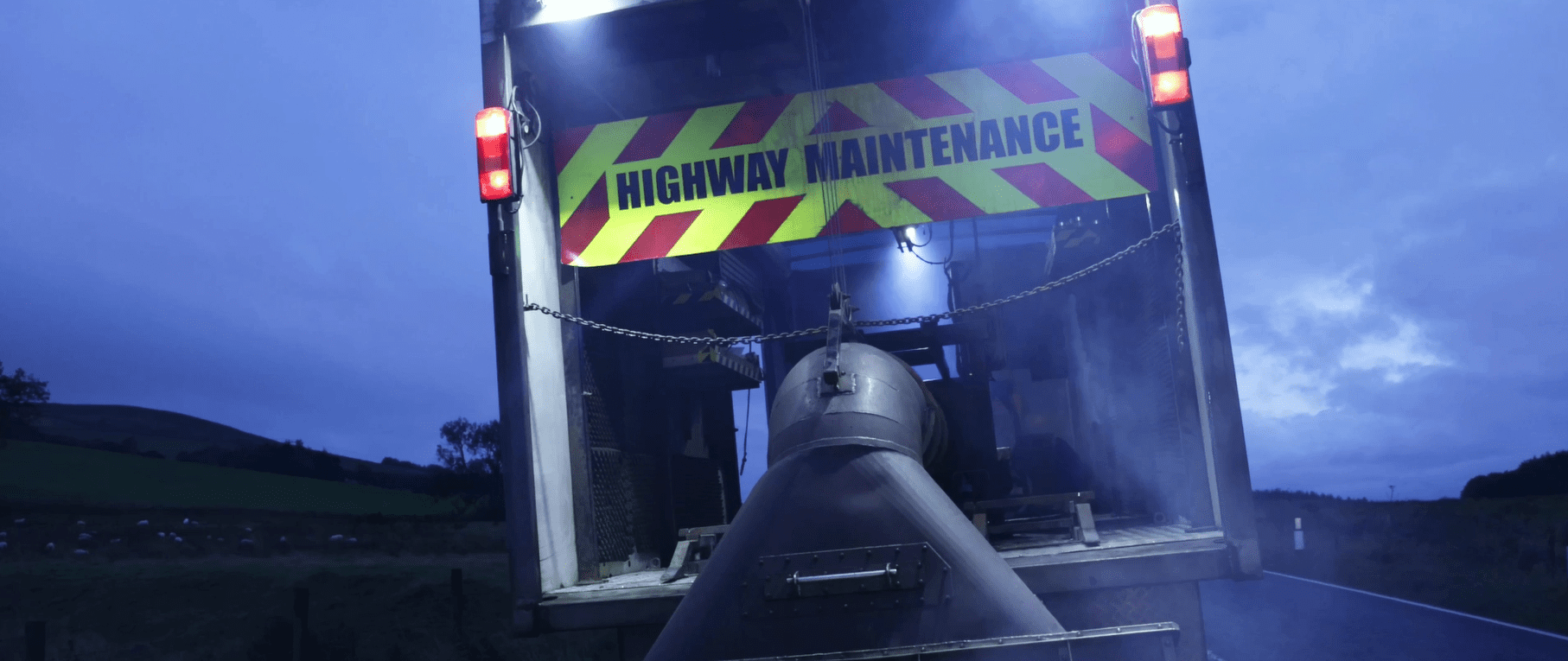
So, they built their own. Partnering with jet car racer Martin Hill, WJ Industrial developed a system using real aircraft jet engines. The result: a lorry-mounted surface dryer capable of treating large areas quickly, evenly, and reliably.
Evolving the System
“We started with a 7.5-tonne version, which worked well for small sites,” Steve says. “Now we’ve scaled up. Our current fleet is built on 18-tonne lorries, with wider diffusers and bigger fuel tanks. That means longer runs and broader drying passes.”
Originally designed for WJ Industrial’s own use, the machines are now also available for operated hire. “We realised quickly that other teams needed the same capability we did—so we made them available more widely.”
Where They’re Used
While they’re regularly deployed on highways and bridge prep projects, WJ Industrial jet dryers have found a wide variety of applications:
- Waterproofing and surfacing contractors working to tight windows
- Film and television production crews (including Fast & Furious stunt shoots)
- Sporting and downhill skateboarding events
- RAF taxiways and runway drying
- Central London closures requiring dry, safe surfaces
“The key thing,” Steve explains, “is giving people the confidence that the job won’t be lost to the weather.”
On Site and On Standby
For WJ Industrial’s own work, especially bridge prep and retexturing, the dryers often serve as insurance. “If the weather’s borderline, we’ll send one out. You don’t always need it—but when you do, it’s the only thing that’ll save the job.”
Some clients now request the dryers in advance, building them into the quote. “It’s become part of the way we manage risk. We can’t control the weather, but we can control how we respond to it.”
Knowing When to Use Them
Jet drying is a powerful tool, but it still has its limits. “In foggy or high-humidity conditions, there’s a fine balance,” Steve says. “If the surface is warm but the air’s wet, you risk drawing moisture back in.”
That’s where operator experience comes in. “Our crews are trained to know when it’s going to work—and when it won’t. If it’s not going to help, we don’t waste time or fuel. We wait it out and make the call.”
Still One of a Kind
WJ Industrial currently operates three jet dryers and is upgrading one of them this summer. “As far as we’re aware, these are still the only jet dryers of their kind in Europe,” Steve says. “In the US, you’ll see similar setups at NASCAR events, but nothing quite like ours operating on infrastructure sites.”
Client Response
Feedback from clients is consistently positive. “People are impressed—not just by the machinery, but by the impact it has on their programme. It takes the pressure off.”
From highway teams to film crews, the message is the same: being able to work when conditions turn wet is often the difference between keeping a project moving—or bringing it to a standstill.