Donegall Square, Belfast
Improving Grip on Belfast’s Busiest Footway
You might be interested in Captive Shotblasting >- Donegall Square, Belfast
- Captive Shotblasting
Summary
In spring 2025, WJ Industrial completed a high-impact granite retexturing project directly outside Belfast City Hall, in the heart of Donegall Square. Commissioned by the Department for Infrastructure (DFI) and delivered in partnership with Breedon, the scheme focused on improving safety in one of the city’s busiest civic spaces, while preserving its architectural heritage.
The works followed a series of slip incidents and growing concerns about the surface condition of the granite paving. Rather than pursuing a costly and disruptive full replacement, DFI turned to WJ Industrial to deliver a more sustainable, lower-impact solution.
The footway surrounding Belfast City Hall had originally been reconstructed in 1999/2000 using Sardinian granite slabs approximately 75mm thick. Despite 26 years of intense daily use, the surface had required very little maintenance. This was a clear reflection of the quality of the original design and materials. However, the constant polishing effect of foot traffic had reduced grip over time, creating clear public liability risks.
Given the civic prominence of the location, traditional resurfacing options such as hot rolled asphalt were considered inappropriate. An alternative was needed that could deliver measurable improvement in safety, preserve the site’s historic appearance and minimise disruption to surrounding businesses and city centre activity.
100–125%
Skid Resistance Increase

200,000
Pedestrians Per Day

~95%
Cost Savings Compared To Replacement
Objectives
The scheme aimed to restore grip and reduce slip risk in an area that sees an estimated 5.6 million visits each month. As Belfast’s highest-footfall pedestrian zone, Donegall Square is used daily by commuters, visitors and tourists, many of whom pass through at peak shopping and business hours.
There was a clear need to raise skid resistance to acceptable thresholds. At the same time, there was a strong desire to retain the character of the granite paving. DFI sought a practical, budget-conscious solution that could be delivered quickly and quietly. Replacing the paving was ruled out on cost and disruption grounds. Alternative overlays were likely to attract criticism given the civic setting.
The project needed to demonstrate that modern surface treatments could deliver the required safety improvements while retaining materials that remained structurally sound.
Solutions
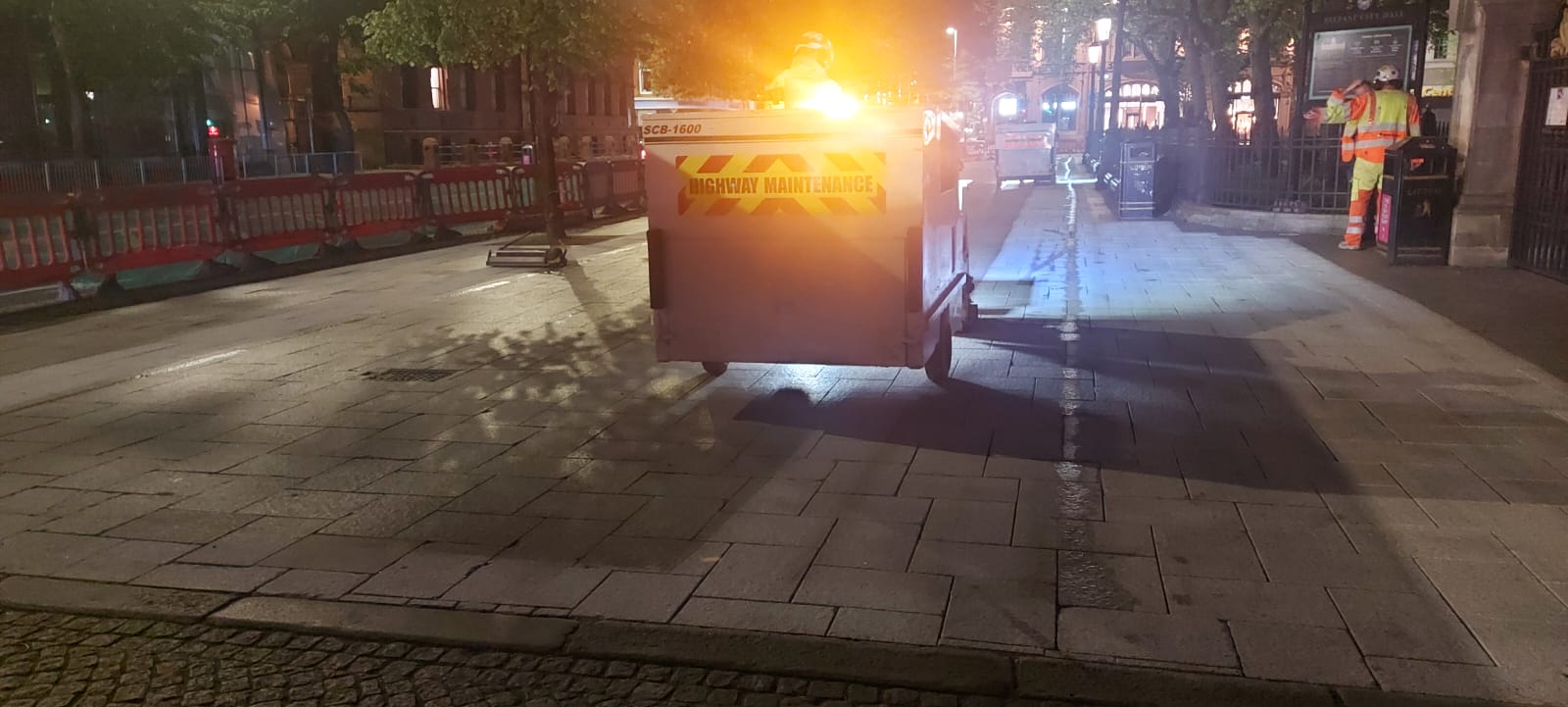
Rather than excavate or overlay the granite, WJ Industrial proposed using captive shotblasting to restore the surface. The method propels graded steel shot at high speed into the paving to roughen the upper surface, increasing both micro and macro texture. The process is fully enclosed and features vacuum recovery, making it virtually dust-free and quiet in operation.
This approach had already been proven by WJ Industrial on a similar public realm project at Omagh Courthouse, where it successfully resolved slipping concerns without the need to replace valuable stone surfaces. Following a recommendation from a senior engineering colleague, DFI appointed WJ Industrial to carry out a joint inspection with Breedon, their Small-Scale and Responsive Works contractor.
One key concern was the proximity of the works to historic commercial premises, many of which feature delicate marble façades and ground-level glazing. To provide reassurance, WJ Industrial supplied bespoke protective barriers in addition to the built-in containment of the machinery. This provided an extra safeguard that was well received by property owners.
During the four-night programme, skid resistance was tested before and after treatment. Initial values between 0.4 and 0.5 sat below the desirable range for pedestrian zones. Following retexturing, these values increased to 0.9, representing a 100 to 125 percent improvement. Surface texture was monitored in real time during delivery to ensure consistent performance, and a detailed post-treatment report was issued within one week of completion.
“Ultimately, the work exceeded expectations and was delivered within budget. A most appreciated and very welcome outcome.”
DfI Site Engineer
Work was carefully programmed around the opening hours of surrounding businesses. Each night, sections of the footway were temporarily closed and pedestrian routes were managed throughout. Thanks to close coordination, the project was delivered without disruption, noise complaints or operational issues. It quietly improved a space used by more than 200,000 people per day.
Results
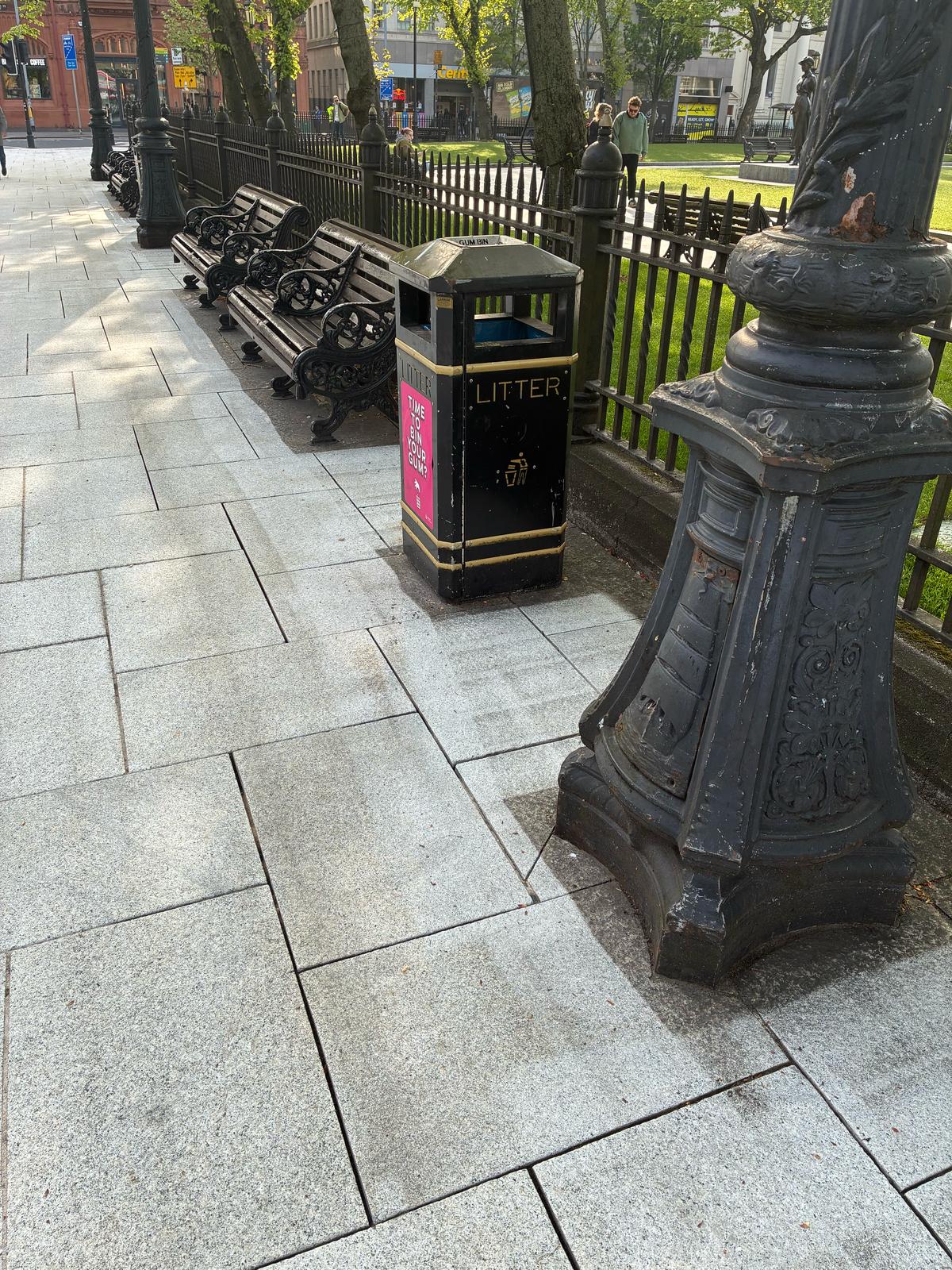
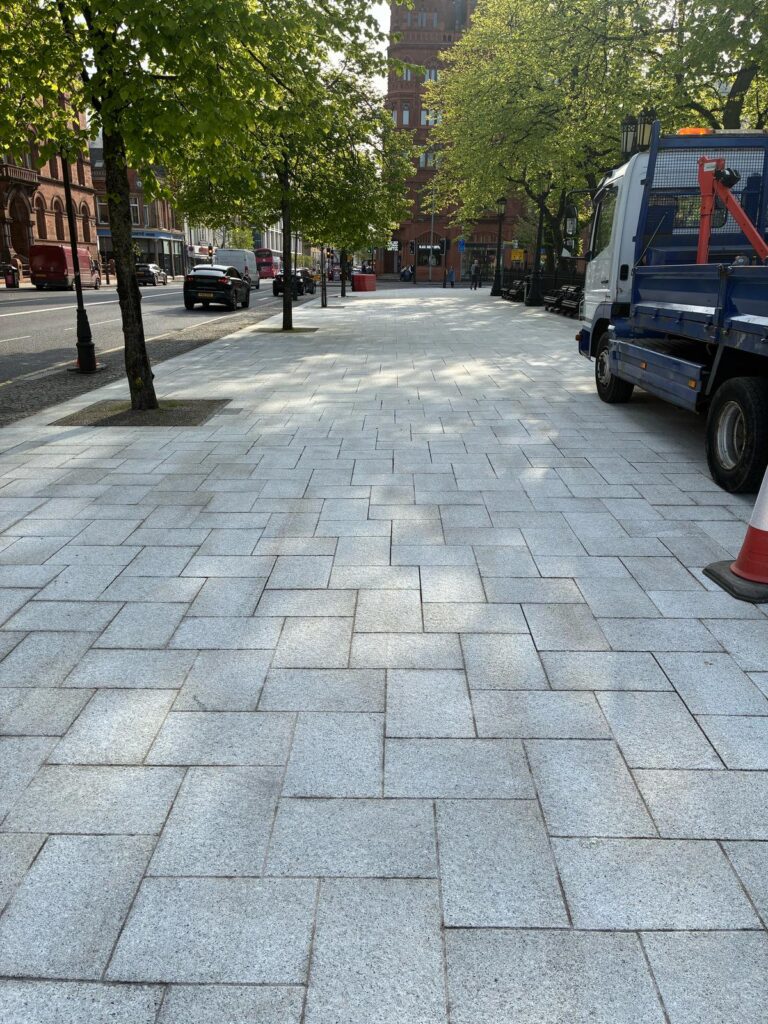
The completed works restored essential grip without altering the appearance of the granite, helping to reduce the likelihood of future incidents while maintaining the civic character of the site. No material was removed or replaced, and the process generated no waste. This avoided the landfill, emissions and cost associated with traditional resurfacing.
Skid resistance improved dramatically and more than doubled in most areas. The public remained largely unaware that surface treatment had taken place, which highlighted how well the process blended into the existing paving. The project has since become a model for addressing slip risk in other heritage or high-footfall areas where traditional methods may not be suitable.
While the Department had not formally costed the replacement of the natural stone surface, it was estimated to fall between £1.2 and £1.5 million. By comparison, the retexturing solution offered by WJ Industrial delivered the same safety benefits with minimal disruption and preserved the existing paving. This approach provided up to a 95% cost saving, making it a highly efficient alternative to full reconstruction in heritage environments.
Such was the success of the work that the local Section Office has confirmed it is now actively considering further sites for treatment using the same method.
“This project at Belfast City Hall really demonstrates how effective retexturing can be in high-profile, high-footfall environments. By restoring the surface without removing it, we’ve made a lasting improvement to pedestrian safety while keeping disruption to an absolute minimum. It’s a great example of what can be achieved with the right combination of technique, timing, and teamwork.”
Mark Kenneally, Operations Director, WJ Industrial
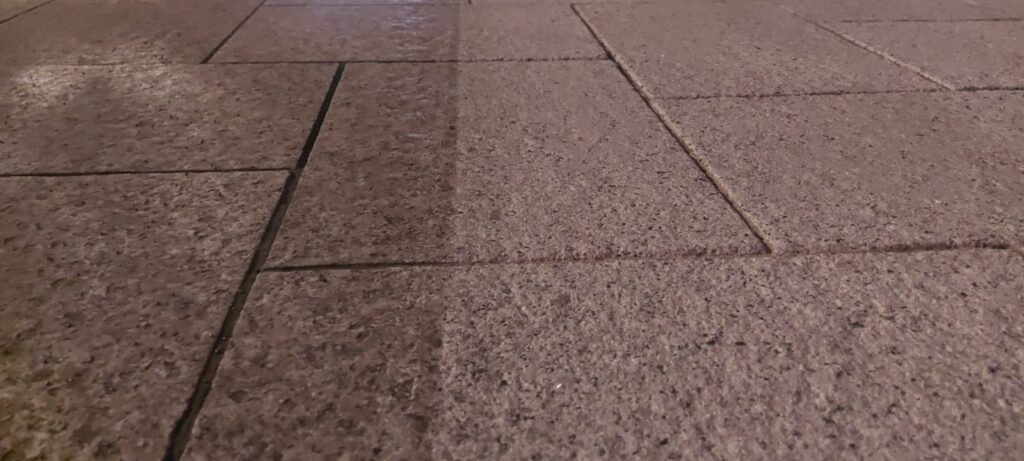

The improvement has been dramatic, but not only from a slip resistance perspective. Queries were initially received from callers asking how we were able to replace large areas of granite slabs in such small nightly working windows, surprised then to learn what work has taken place.
While the resulting slip resistance improvement can immediately be detected underfoot, which was the main objective, the work has had a pleasing aesthetic benefit where the appearance of the footway at City Hall now appears to be new. The Department now considers CSB an important alternative for the recovery of Public Realm sites where structural integrity is good, yet reduced slip resistance might be an issue.
DfI Site Engineer